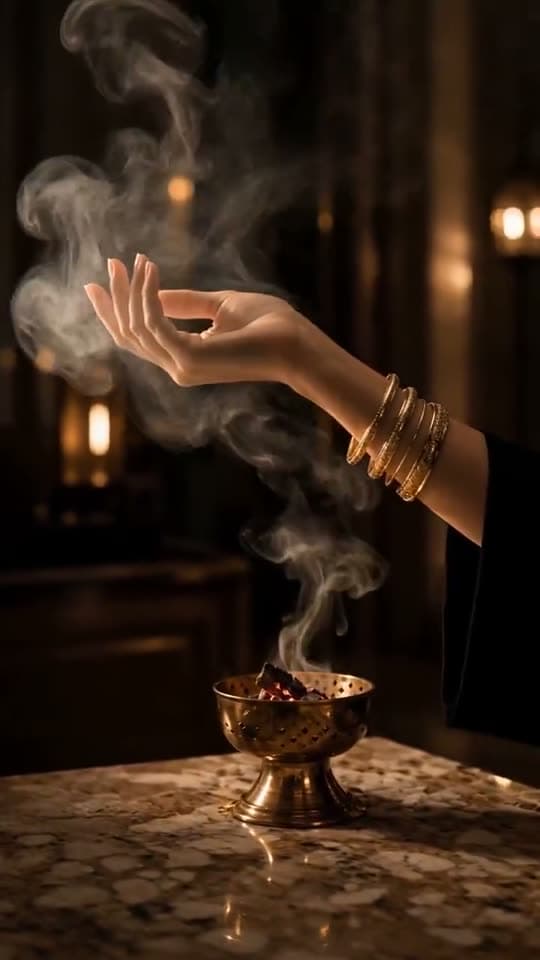

AI video production for perfume brands works best as a hybrid: your real bottle, filmed or photographed properly, combined with AI-generated worlds that show what the fragrance smells like. AI is excellent at mood, ingredients and transformation. It is still unreliable at glass, liquid and label text, so those need a human eye and real product footage.
In this guide, we cover how to turn top, heart and base notes into shots, why perfume bottles trip up AI models, the workflow we use, and the formats that matter for launches, Ramadan and Eid gifting, duty-free screens and UGC-style "scent reaction" ads. We also cover Arabic and English versions, how to brief, disclosure, and when you should skip AI and book a studio.
Why Perfume Is One of the Hardest Products to Sell on Video
Most products can be demonstrated. You can show a blender blending or a serum absorbing. A fragrance can't be shown at all, because the thing people pay for is invisible. The viewer has to imagine the smell from what they see and hear.
That is why perfume advertising has always leaned on metaphor: a beach at dawn, smoke curling through a souk, a petal falling in slow motion. The ad borrows a memory the viewer already has and attaches it to your bottle.
You Are Selling a Feeling, Not a Liquid
A good fragrance video answers three questions in a few seconds. What does it smell like? Who wears it? How will I feel wearing it? If the video answers none of these, it is just a pretty bottle on a plinth, and the scroll continues.
In our experience, the brands that do well online treat each scent as a character with a clear personality. A fresh citrus cologne gets a different world, pace and soundtrack from a smoky oud. The bottle stays the same; the world around it changes.
What AI Changes for Fragrance Brands
Traditional perfume films need locations, models, set builders and days of post-production for every concept. With AI, you can test five worlds for one scent before committing to one. A rose garden at golden hour, a desert at night or a splash of bergamot oil can be built without travel or a set.
That speed matters most when you have a large range. A GCC house with 30 or more scents can't fund a hero film for each one, but it can give every scent its own short visual world. For a sense of what fully AI-made spots look like, see these AI commercial examples and how each spot was produced.
How to Visualize a Fragrance: Notes, Mood and Ingredients
The fastest way to make a scent feel real is to stop describing it with adjectives and start describing it with objects, textures, temperature and light. "Fresh" means nothing to a camera. "Cold water beading on a green fig leaf at 7 a.m." gives the viewer something to smell.
Top, Heart and Base Notes as a Three-Act Story
Perfumers build a fragrance in layers, and that structure makes a ready-made storyboard. We often cut a 15 to 20 second fragrance ad into three short acts:
- Top notes (0 to 4 seconds): bright, fast and close. A citrus peel twisting, a spray of mist catching light, quick cuts. This is your hook.
- Heart notes (4 to 12 seconds): slower and fuller. Florals opening, spices being ground, fabric moving. The bottle appears in context.
- Base notes (12 to 20 seconds): deep, warm and still. Wood grain, amber resin, smoke, skin. The final packshot holds long enough to read the name.
This mirrors how the scent actually behaves on skin, so it feels honest to people who know fragrance. It also gives you natural cut points for 6-second and 10-second versions.
Ingredient and Origin Shots
Ingredients are the most concrete thing a perfume brand can show. Saffron threads, Taif roses, sandalwood shavings, vanilla pods and agarwood chips all read instantly on a phone screen. AI handles these macro shots well, because nobody checks a rose petal against a reference photo.
If you make origin claims, such as roses from a specific region or a particular grade of oud, keep the visuals honest. Show the ingredient, but don't invent harvest scenes that suggest your sourcing is something it isn't.
Transformation Shots
Transformation is where AI clearly beats a traditional shoot. The bottle dissolves into a wave, the liquid turns into a field of lavender, or smoke from a burner forms the outline of a face. These shots would need heavy CGI on a normal production. With AI, they become sketches you can test in an afternoon.
Keep one rule: the transformation should end on the real bottle. Start in the dream, finish on the product.
Mood by Fragrance Family
Use this table as a starting point when you build mood boards or prompts.
- Citrus and fresh: Visual world: Sea spray, sliced fruit, linen in wind; Light and color: Bright daylight, whites and yellows; Pace and sound: Quick cuts, airy and upbeat
- Floral: Visual world: Petals, gardens, silk; Light and color: Soft diffused light, pinks and creams; Pace and sound: Slow, flowing, light strings
- Woody: Visual world: Cedar grain, forest floor, leather; Light and color: Warm side light, browns and greens; Pace and sound: Steady, low, textured sound
- Oud and amber: Visual world: Smoke, incense burners, desert night, brass; Light and color: Low key, gold and deep red; Pace and sound: Slow, rich, oud or percussion
- Gourmand: Visual world: Vanilla, caramel, coffee, cocoa; Light and color: Warm golden tones; Pace and sound: Close-up, intimate, soft
- Aquatic: Visual world: Water, rain, glass, waves; Light and color: Cool blues, high contrast; Pace and sound: Fluid camera, ambient sound
Where AI Struggles With Perfume Bottles
Here is the honest part that tool pages leave out. Perfume bottles are close to the worst-case object for current AI video models. Many of the AI perfume ads you see online quietly avoid showing the bottle clearly for this reason.
Glass, Liquid and Refraction
Glass bends light, reflects the room and shows the liquid behind it. AI models often get the physics wrong: reflections that don't match the scene, liquid that changes color between frames, or a level that drifts up and down. Faceted bottles and thick glass bases are especially hard.
Reflective luxury products share this problem. Gold, diamonds and polished metal fail in similar ways, which is why our guide to AI video production for jewelry brands spends so much time on reflections and highlights.
Caps, Atomizers and Label Fidelity
The cap is often the most designed part of a luxury bottle, and AI loves to simplify it. Engraved metal turns smooth, a carved stone cap loses its facets, and the atomizer moves position. Labels are worse. Brand names, Arabic calligraphy and small print get misspelled or melt into shapes that only look like letters.
A shopper may forgive a dreamy background. They won't forgive a bottle that looks different from the one they receive. For any shot where the label must be read, use real photography or a CGI model built from your packaging files.
Keeping One Bottle Consistent Across Shots
Even when one AI shot looks right, the next one may change the bottle's proportions, the cap color or the liquid tint. Across a 20-second ad with eight shots, small drift becomes obvious. Image-to-video generation from approved stills, reference-locked frames and a strict QA pass help a lot, but they don't remove the risk. Plan for some shots to be rejected and regenerated.
The Hybrid Workflow We Use for Fragrance Videos
This is the process our team follows for a fragrance ad, from brief to delivery.
- Brief and scent profile. We collect the notes pyramid, the target customer, the occasion, the channels, and words the brand never wants used.
- Packshot capture. We photograph or film the real bottle on a clean background from several angles, plus macro details of the cap and label. If 3D packaging files exist, we use them.
- Mood frames. We generate still frames for each act of the story and agree on one direction before any motion is made. Stills are fast to change; video is not.
- Motion generation. We animate the approved frames with current models. Our Veo 3 guide for marketers explains how we prompt shots like these and where that model is strongest.
- Product compositing. The real bottle is placed or tracked into the AI world wherever it needs to be accurate, with reflections and shadows matched in the edit.
- Sound and voice. Fragrance lives on sound: the spray, glass touching marble, fabric, ambient music. Voiceover is recorded or generated in English and Arabic as needed.
- QA and versions. A human checks every frame for bottle drift, label errors and odd hands. Then we cut ratios and lengths for each channel.
Steps 2 and 5 are what separate a usable brand asset from an AI experiment. Skip them and you end up with a video of a perfume that doesn't exist.
Oud, Attar and Designer Perfume: Different Houses, Different Briefs
A one-size approach fails here, because the buyer, the ritual and the visual codes are different.
Arabian Oud and Attar Houses in the GCC
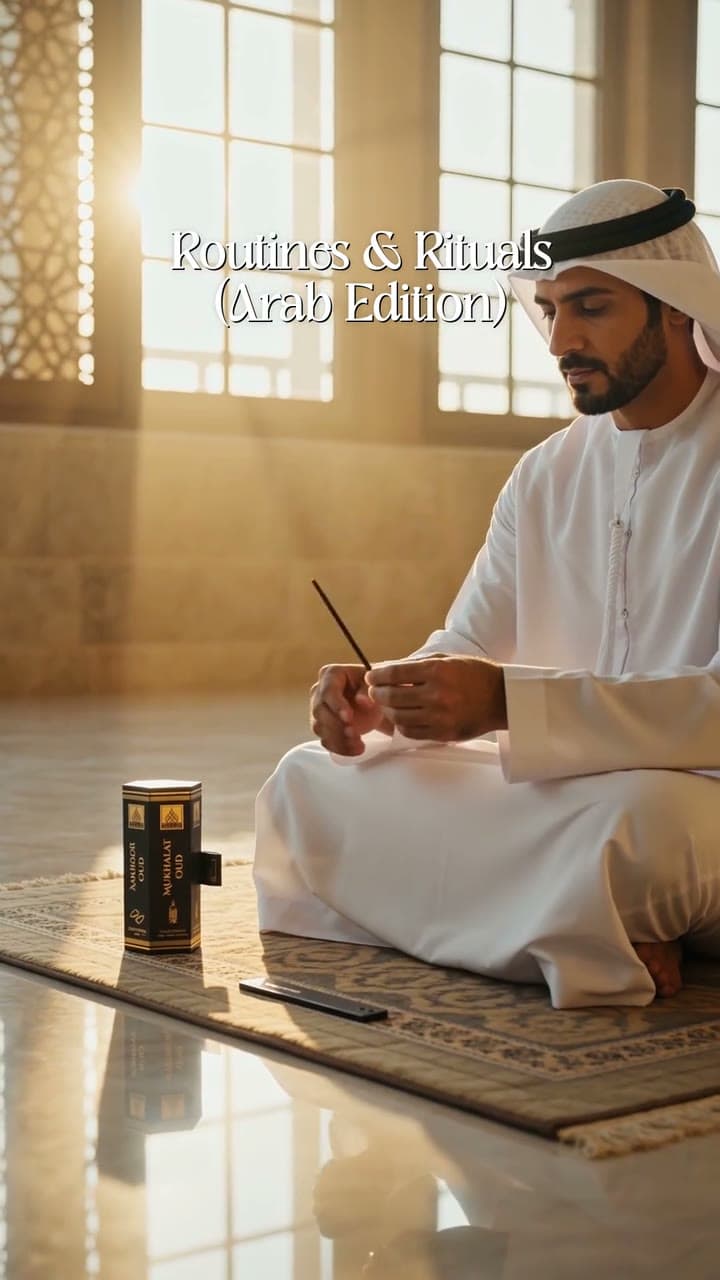
For oud, bakhoor and attar brands, the ritual is part of the product. Customers know layering, the burner, the small oil bottle and the way scent is shared with guests. Videos that show the ritual feel authentic: a bakhoor burner being prepared, oil applied to the wrist, a majlis welcoming visitors.
Visual codes lean on gold, deep wood, calligraphy and heritage, but the best recent work mixes them with clean, modern styling so the brand doesn't feel dated. We have produced premium product graphics and UGC-style video ads for a fragrance brand selling in Saudi Arabia, and the lesson was clear: Gulf customers respond to confidence and richness, and they notice instantly when cultural details are wrong.
Global Niche and Designer Fragrance
Niche brands sell a story and an ingredient. Their videos work best when they are specific: one note, one place, one memory. Designer and celebrity-style fragrances sell a lifestyle, which usually means a person and a feeling of status.
AI fits niche brands well because their worlds are often abstract. Designer-style ads that rely on a recognizable face or a cast of models are harder, since AI people still risk looking generic or uncanny in close-up.
Video Formats for Launches, Ramadan, Eid and Duty-Free
Different moments need different assets. Plan the whole set before production so one shoot or one set of AI worlds feeds every format.
Launch Hero Film and Cutdowns
A launch usually needs one hero film of 20 to 30 seconds for YouTube and retail screens, plus 6, 10 and 15 second cutdowns for paid social. The first two seconds decide whether the short versions get watched. This list of video ad hooks sorted by the job they do is a useful bank of openers to test.
Ramadan and Eid Gifting
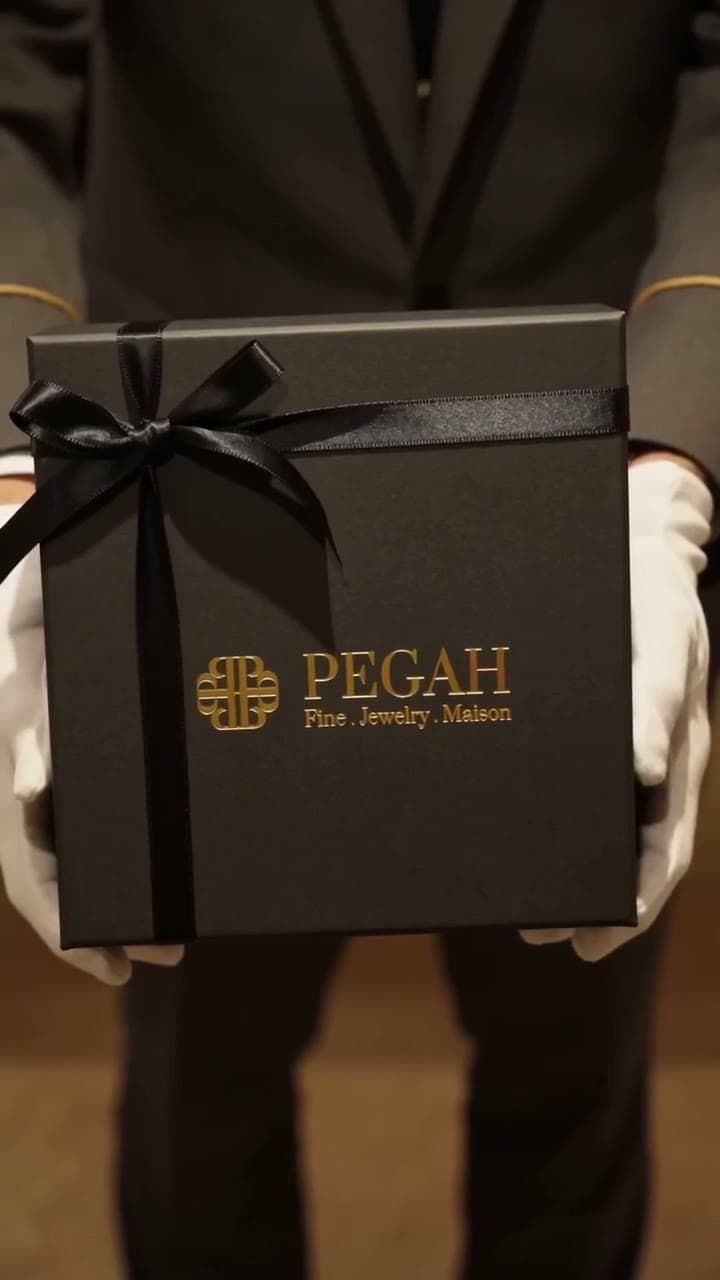
In the Gulf, Ramadan and Eid are major gifting moments, and fragrance is one of the most common gifts. Gifting creative should show the gift set, the box being opened and the moment of giving, not just the bottle. Calm, warm visuals suit Ramadan; Eid can be brighter and more celebratory.
Plan these early. Teams that brief in the final weeks before Ramadan usually end up reusing last year's creative. AI helps here because you can refresh gift-set scenes each season without rebuilding sets.
Duty-Free and Retail Screens
Airport and mall screens are watched without sound, often from a distance and for a few seconds. Make the bottle large, keep text to the brand name and one line, and loop the video cleanly so there is no visible jump. Horizontal and vertical versions are usually both needed for different screen types.
UGC-Style Scent Reaction Videos
Reaction videos are one of the strongest formats for selling scent online. A person sprays, pauses, and describes what they smell and how it makes them feel. It solves the "can't smell it" problem with a real human reaction.
These work best with real creators who have actually worn the fragrance. Fragrance shoppers trust reactions because they assume the person smelled it. Using an AI avatar to fake a reaction to a scent it never smelled crosses a line, and you should keep these real. Many of the same rules apply to skincare, which sits next to perfume on the beauty shelf; our guide to AI video ads for skincare brands covers where AI helps and where real creators matter more.
Formats at a Glance
- Launch hero film: Best for: YouTube, retail screens, website; Typical length: 20 to 30 seconds; AI role: Worlds and transformations; real bottle composited
- Social cutdowns: Best for: Reels, TikTok, Stories; Typical length: 6 to 15 seconds; AI role: Fast variants by note and hook
- Gifting edit: Best for: Ramadan, Eid, National Day, year-end; Typical length: 10 to 20 seconds; AI role: Seasonal scenes around the real gift set
- Retail loop: Best for: Duty-free, mall screens; Typical length: 10 to 20 seconds, silent; AI role: Backgrounds and motion; packshot stays real
- Scent reaction: Best for: TikTok, Reels, Snapchat; Typical length: 15 to 30 seconds; AI role: Editing and captions only; the reaction stays human
- Note explainer: Best for: Product pages, carousels; Typical length: 10 to 15 seconds; AI role: Ingredient macros and notes pyramid animation
Arabic and English Versions
For GCC brands, Arabic and English versions are usually both needed, and they should be built as separate edits rather than one video with subtitles. Arabic reads right to left, so text placement, logo position and the direction of movement may need to change. Arabic copy is also often a different length, which affects timing.
Fragrance language is cultural, too. Words that sound luxurious in English can sound flat when translated directly into Arabic, and the reverse is true. Write each script natively rather than translating it. We use the same bilingual edit system for other premium Dubai categories, including AI video for real estate marketing, where Arabic and English buyers also expect content made for them.
Voice matters most here. A Gulf Arabic voice and a Levantine or Egyptian voice land very differently with Saudi and Emirati audiences, so match the dialect to the market you are selling in.
How to Brief an AI Perfume Video
A clear brief saves more time than any tool. Include the following:
- The scent: notes pyramid, fragrance family, and three objects or places the perfumer associates with it.
- The customer: who buys it, who wears it, and whether it is usually a gift.
- The bottle: high-resolution photos from all sides, cap and label close-ups, and 3D files if you have them.
- The no-go list: colors, symbols, music styles and claims to avoid, including any cultural sensitivities for your markets.
- The occasion and channels: launch, Ramadan, Eid or always-on, and where each version will run.
- Languages: English, Arabic or both, and which dialect for voiceover.
- Approval rules: who signs off on the bottle accuracy, and who has final say on the mood.
If you want a structure for judging the cuts once they arrive, this 10-point scorecard for a good video ad works well for fragrance too.
Costs depend on how many worlds, how much real product footage, how many languages and how many versions you need. We don't publish prices because every fragrance brief is different, so the best route is a quote based on your range and your calendar.
Disclosure, Claims and Trust
Platforms now ask advertisers and creators to label realistic AI content. TikTok explains its approach in its guidance on AI-generated content labels, and YouTube asks creators to disclose altered or synthetic content that looks real. Check the current rules for each platform before launch, as they change often.
Beyond platform rules, the main risk for perfume is misleading depiction. The bottle, the color of the juice, the size and the contents of a gift set must match what the customer receives. An abstract world of smoke and roses is clearly a mood. A bottle that looks bigger or more ornate than the real one is a promise you can't keep.
Be careful with performance language too. Claims about how long a scent lasts or how many compliments it gets should come from your own testing or real reviews, not from a script.
When Not to Use AI for a Fragrance Video
AI isn't always the right choice. We recommend a traditional shoot, or a mostly filmed hybrid, when:
- The bottle is the hero. For a new flacon design where the glasswork is the selling point, real photography or precise CGI will show it better.
- A real face carries the campaign. If you have a known ambassador or influencer, film them. AI faces in close-up still look less convincing.
- The video makes a factual claim. Longevity tests, ingredient sourcing and craftsmanship stories need real footage to be believable.
- Your audience is skeptical of AI. Some heritage houses and collectors value craft. For them, an obviously AI look can hurt the brand.
- You need reactions. Scent reactions should come from people who actually smelled the fragrance.
In most cases, the answer is not AI or a camera but both. Film what must be true, and use AI for what should feel like a dream.
Frequently Asked Questions
Can AI video really make a perfume look luxurious?
Yes, when it is used for the world around the bottle rather than the bottle itself. AI is strong at moody lighting, ingredient macros, smoke, water and transformations, which are the visual language of luxury fragrance. The bottle, cap and label should come from real photography or an accurate 3D model, with a human checking every frame for drift and errors before anything is published.
How do you show what a perfume smells like on video?
You translate the notes into things people already know how to smell. Show objects, textures, temperature and light: cold citrus peel, warm amber resin, smoke from a burner. Structure the ad like the scent itself, with bright top notes as the hook, fuller heart notes in the middle and deep base notes on the final packshot. Sound effects and music finish the impression.
Why does AI get perfume bottles wrong?
Glass, liquid and reflections are hard for current AI video models to render consistently. They often change the bottle's shape, cap details or liquid color between shots, and they misspell labels, including Arabic calligraphy. That is why we capture real packshots first and composite the actual bottle into AI-generated scenes wherever it has to be accurate, then check every frame by hand.
Is AI video suitable for oud and attar brands?
It can be, as long as the cultural details are right. AI is useful for building rich worlds of smoke, wood, gold and desert light around an oud or attar bottle. The ritual, such as preparing a bakhoor burner or applying oil, should look authentic to Gulf customers. Use people who know the culture to review every frame, and keep the real product accurate.
Do I need separate Arabic and English perfume videos?
For GCC campaigns, usually yes. Arabic reads right to left, so text, logos and motion may need to move, and Arabic copy often runs a different length. Fragrance language also translates poorly word for word. Write each script natively, match the voiceover dialect to the market, and build two edits rather than one video with subtitles.
Do AI perfume ads need to be labeled as AI?
Platforms increasingly require it for realistic AI content. TikTok and YouTube both publish guidance on labeling or disclosing synthetic media, and the rules are updated often, so check each platform before launch. More importantly, never let AI misrepresent the product itself. The bottle, juice color and gift set contents in the ad should match what customers receive.
Ready to Put Your Fragrance on Screen?
If you are planning a launch, a Ramadan or Eid gifting push, or simply want every scent in your range to have its own visual world, our team can help. We combine AI production with a human creative team in Dubai, keep your real bottle accurate on screen, and deliver English and Arabic versions for every channel.
Tell us about your range and your calendar, and get a quote for your fragrance video. We will suggest the mix of AI and real footage that fits your brand.