Influencer Marketing Video Examples: 12 Collab Formats, What Creators Film and How Brands Reuse It (2026)

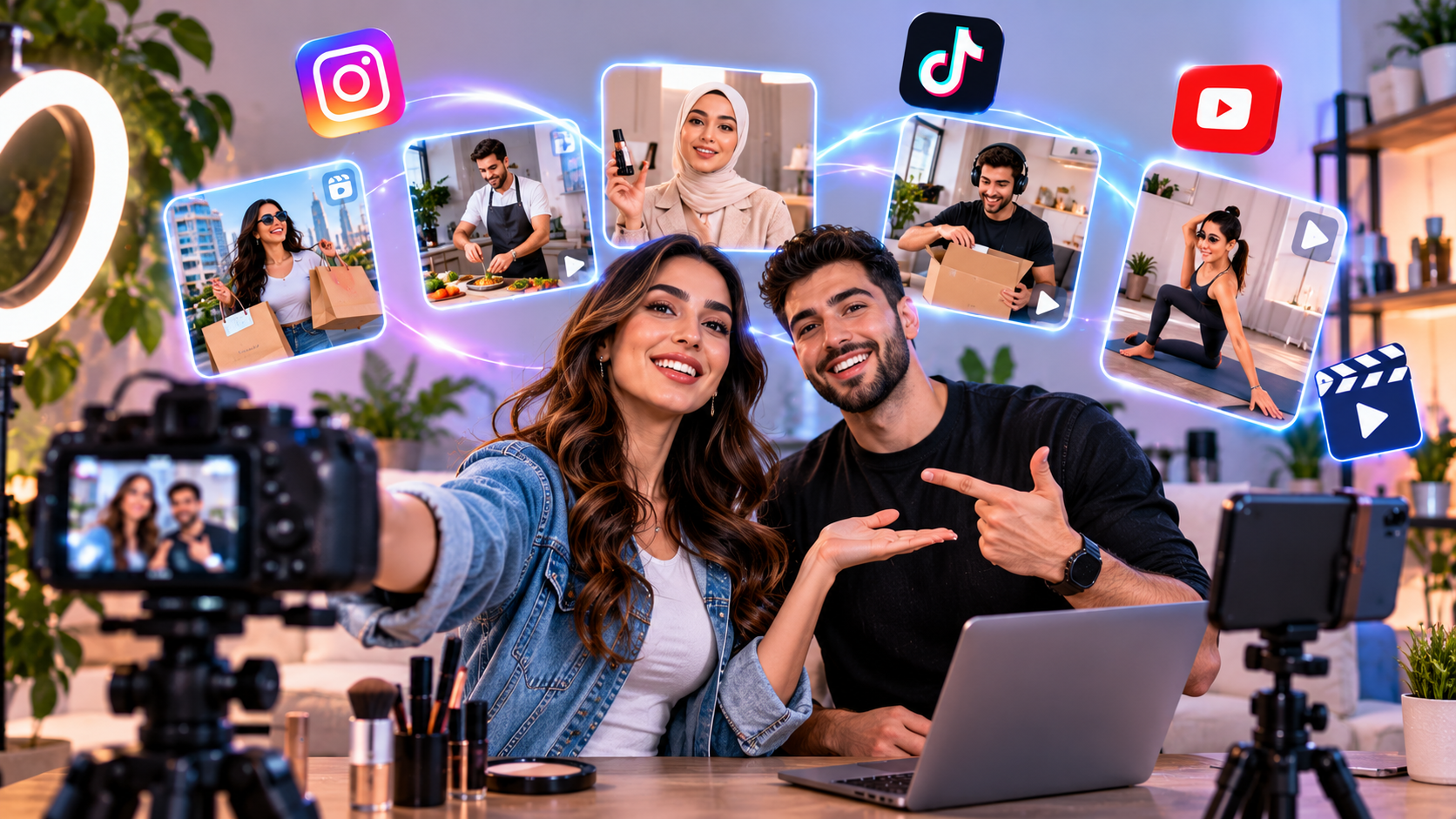
The best influencer marketing video examples are not famous campaigns. They are repeatable formats: a day-in-the-life vlog, an unboxing, a tutorial, an honest review, a venue visit, a creator-fronted ad. Each one puts your product inside a creator's world, in their voice, in front of people who already trust them.
This guide covers influencer marketing video examples as 12 collaboration formats you can brief this month. For each one you get a realistic scenario, what the creator films, the line to put in the brief and where it performs best. Then we cover how to brief creators, how to license their videos for paid ads, what changes in Dubai and the GCC, and what to measure. We plan and edit creator content as ad creative every week, so the advice comes from the edit suite, not a highlight reel.
In this guide
- What counts as an influencer marketing video
- 12 influencer marketing video examples by format
- Matching formats to goals and platforms
- How to brief a creator without killing the authenticity
- Usage rights and turning creator videos into ads
- How to choose the right creators
- Influencer video in Dubai and the GCC
- Disclosure and honest claims
- How to measure influencer marketing videos
- Frequently Asked Questions
- Plan your next creator campaign with XMA
What counts as an influencer marketing video
An influencer marketing video is a video a creator makes and posts to their own audience, about your product, as part of a paid or gifted partnership. The creator's channel, voice and followers are the point. You are borrowing trust that took them years to build.
That makes it different from two formats it often gets confused with. User-generated content (UGC) is creator-style video made for your brand to post or run as ads, usually from creators with no big following. We explain that model in our guide to building a UGC marketing program. Brand-made video is content your own team or agency produces and publishes.
Here is how the three routes compare on the points that matter when you plan a campaign.
In practice, the lines blur. A strong influencer video can be licensed and run as a paid ad, and a UGC creator can grow a following. The useful question is simple: do you need their audience, or do you need their style? If it's the audience, you need an influencer. If it's the style, UGC is often faster and easier to test.
12 influencer marketing video examples by format
Each example below is a format, not a one-off stunt. The scenarios are composites of the briefs we see most often, written so you can swap in your own product and market.
1. The day-in-the-life vlog
Scenario: a Dubai-based fitness creator films a normal weekday: an early run on the beach path, a work call, a quick lunch, an evening class. Your protein snack appears three times, in her bag, at her desk and after training.
What the creator films: morning routine, commute or workout, two or three natural product moments, an end-of-day voiceover.
Brief note: ask for the product to appear where it genuinely fits their day. Never ask for a close-up product hero shot in the middle of a vlog. It breaks the spell.
Best for: daily-use products such as food, skincare, fitness gear, apps and coworking spaces. Works on YouTube for long versions and on Reels or TikTok as a 30 to 60 second cut.
2. Unboxing and first impressions
Scenario: a tech creator opens a new pair of wireless earbuds on camera, comments on the packaging, pairs them with a phone and tests the noise cancelling in a busy cafe.
What the creator films: the sealed box, the opening, the first touch, setup in real time, a first test in a real setting, a quick verdict.
Brief note: send the product with no instructions on what to say about the packaging. If the reaction is honest, it will be more convincing than anything you script. Only flag the one or two facts that must be correct.
Best for: gadgets, beauty sets, subscription boxes, gift sets and anything with packaging you've invested in.
3. The tutorial or how-to
Scenario: a home cook shows how to make a quick weeknight biryani using your spice blend, step by step, with the pack visible on the counter.
What the creator films: ingredients laid out, each step in close-up, the finished dish, a taste reaction and the result plated.
Brief note: the product should be the tool, not the topic. The video's promise is "how to make X", and your product is how the creator makes it easier. Tutorials keep earning views long after posting because people search for them.
Best for: cooking, beauty, software, tools, cameras and anything with a learning curve. Strong on YouTube and as saved Reels.
4. The honest review or comparison
Scenario: a skincare creator tests your sunscreen for two weeks in Gulf summer heat and reports on texture, white cast, how it sits under makeup and whether it lasted through a commute.
What the creator films: the product on day one, short check-ins, a side-by-side with what they used before (no other brand named), and a final verdict with one honest downside.
Brief note: allow the creator to mention a real limitation. A review with no downside reads as an ad, and audiences can tell. Agree in writing on which claims need evidence, especially for skincare, supplements and health products.
Best for: considered purchases where buyers research first. If you sell beauty products, our cosmetics marketing page shows how we plan creative for that category.
5. Get-ready-with-me (GRWM) or styling video
Scenario: a fashion creator gets ready for a wedding in Abu Dhabi, talking to camera while doing makeup, picking an abaya and choosing between two pairs of shoes from your collection.
What the creator films: a mirror setup, talking while getting ready, outfit changes, a final reveal and a walk-out shot.
Brief note: give the occasion, not the script. The creator's chat is what keeps people watching. Clothes need to show fit and movement, which we cover in our playbook on fashion video ads that show fit and fabric.
Best for: fashion, beauty, jewelry, fragrance and accessories.
6. The haul or roundup
Scenario: a home creator shows ten things she bought for a new apartment, and three of them are from your homeware range.
What the creator films: each item held up or placed in the space, a quick opinion on each, prices left out unless you agree otherwise.
Brief note: hauls are low-cost for brands because you share the video with other products. The trade-off is that you get less screen time. Ask for your items early in the video, before attention drops.
Best for: fashion, homeware, beauty and e-commerce stores with wide ranges.
7. The venue or experience visit
Scenario: a food creator visits your new restaurant in Jumeirah on a weekday evening, orders four dishes, talks to the chef for 20 seconds and rates the view from the terrace.
What the creator films: arrival, the room, the menu, dishes arriving, first bites, a short chat with staff, the bill moment (with no amount shown) and a closing verdict.
Brief note: book the visit at a time when the venue looks like itself, not empty, and tell the team who is coming. Don't ask for a list of every dish. Let the creator pick what genuinely excites them.
Best for: restaurants, hotels, spas, gyms, clinics, attractions and showrooms.
8. Event or launch coverage
Scenario: three creators attend your product launch at a Dubai gallery. Each films arrival, the reveal moment, a quick try of the product and a selfie-style reaction posted the same night.
What the creator films: the setup, the reveal, hands-on moments, short interviews with the team and a same-day Story or short video.
Brief note: give creators early access to the venue so they can find their angles, and good light near the product. Plan a shot list for your own crew too, so you have brand-owned footage of the same night.
Best for: product launches, store openings, pop-ups and brand activations.
9. Trend or challenge video
Scenario: a comedy creator uses a trending audio format to act out the "before and after" of trying to find a parking spot, ending with your parking app solving it.
What the creator films: a short skit built on a format the audience already knows, usually under 30 seconds, with the product as the punchline.
Brief note: trends move fast, so approvals need to move fast too. Agree the product message and the no-go topics, then let the creator choose the trend. A two-week approval chain will kill it. Our sibling guide on what social video is and how it differs from TV-style content explains why native formats beat polished ones in the feed.
Best for: apps, snacks, drinks and brands with a light tone. TikTok and Reels first.
10. Giveaway or contest
Scenario: a parenting creator announces a giveaway of your stroller, explains three features she likes and asks followers to comment with their best travel tip to enter.
What the creator films: the product, the reason they like it, clear entry rules on screen and a follow-up video announcing the winner.
Brief note: giveaways bring fast engagement but the audience can be prize-hunters rather than buyers. Use them for awareness and list building, not as proof the product sells. Check each platform's promotion rules and any local permit requirements before you launch.
Best for: new brands that need awareness quickly, and seasonal moments such as Ramadan, Eid and back to school.
11. The long-term ambassador series
Scenario: a running creator trains for a half marathon over 12 weeks, posting a weekly update. Your running shoes appear in every episode, and the final race is the payoff.
What the creator films: a recurring format with the same opening, weekly progress, honest setbacks and a final result.
Brief note: a series builds trust that a single post can't, because the audience sees the product used over time. Contract for the full run, agree a content calendar and leave room for real setbacks. They are often the episodes people remember.
Best for: fitness, education, finance apps, cars and any product whose benefit shows over weeks rather than seconds.
12. The creator-fronted paid ad
Scenario: a beauty creator records a 30-second video for your serum on her own account. It performs well organically, so you license it and run it as a paid ad from her handle, aimed at women aged 25 to 40 in the UAE and Saudi Arabia.
What the creator films: a tight hook in the first two seconds, the problem, the product in use, a result shot and a clear call to action, often recorded with two or three alternative openings.
Brief note: ask for alternative hooks and a version with no on-screen text in the contract from the start. That one request turns a single post into a set of ad variants. This is where influencer marketing and paid social advertising meet.
Best for: any brand with a paid social budget that wants creator trust at ad scale.
Matching formats to goals and platforms
Most brands don't need all 12 formats. Pick two or three that match your goal for the quarter, then add more once you know which creators and formats work for you.
This matrix maps each format to the job it does best, the platforms it suits and a sensible length for a first test.
Two patterns show up again and again. Short vertical formats win reach, while long YouTube formats win trust and search traffic for months. If your buyers research before they buy, budget for at least one long-form review or tutorial alongside the short cuts.
How to brief a creator without killing the authenticity
The most common reason influencer videos underperform is not the creator. It is a brief that turns them into a presenter reading brand copy. A good brief protects the facts and leaves the creator's voice alone.
Here is the order we build a creator brief in.
- State the one goal. Awareness, a launch date, store visits or sales. One goal per brief keeps the video focused.
- Describe the audience in one line. For example: "working mums in Dubai who want quick weeknight meals."
- Give the single message. One thing the viewer should remember, in plain words, not a tagline.
- List must-say facts. Two or three facts that must be accurate, such as a launch date, a flavour or a store location.
- List must-not-say points. Claims you can't support, competitor mentions, pricing promises and sensitive topics.
- Name the format, not the script. "A tutorial showing a 15-minute dinner" works better than a word-for-word script.
- Set the deliverables. Number of videos, lengths, aspect ratio, Stories, alternative hooks and raw footage.
- Agree the timeline and approvals. One round of feedback, focused on facts and compliance, not taste.
- Settle rights and disclosure up front. How long you can reuse the video, where, and how the partnership is labelled.
A brief like this fits on one page. If yours runs to six pages, the creator will either ignore it or follow it so closely the video feels like an ad. When we produce creator-style videos ourselves, our video production team uses the same one-page structure so shoots stay loose but on message.
Usage rights and turning creator videos into ads
An organic post lives on the creator's feed for a few days and then fades. The same video run as a paid ad can reach far more people in your target audience, for weeks. That's why rights are the most valuable line in an influencer contract, and the one brands forget most often.
These are the main options to negotiate, from lightest to most extensive.
Running creator posts as ads
On TikTok, a creator can give you an authorization code so you can boost their original post as a Spark Ad, keeping their handle, comments and likes on the ad. TikTok explains the setup in its Spark Ads help article. Meta offers a similar route through partnership ads on Instagram and Facebook, where the ad shows both the creator's and your brand's names.
Ads that run from a creator's handle usually look more native in the feed than ads from a brand page. They still need strong hooks, and they still wear out. Plan fresh creator content before the old ads tire, the same way you'd refresh any paid creative.
Re-editing raw footage
If you secure raw footage, one creator shoot can become a whole test set: three different hooks, a 15-second cut, a 30-second cut and a version with captions in Arabic. This is where an editing team adds the most value. The creator's performance stays the same, but the opening, pacing and call to action change for each audience.
How to choose the right creators
Follower count is the least useful number on a creator's profile. A smaller creator with a tight, engaged audience in your city often drives more action than a big account with followers spread across the world.
Creator tiers at a glance
- Nano creators have small, close communities. They suit gifting, local businesses and testing new messages.
- Micro creators often have a clear niche, such as Dubai food or GCC parenting. They are usually the best value for product categories with a clear audience.
- Mid-tier creators bring reach with some niche focus. They suit launches and ambassador series.
- Macro creators and celebrities bring mass reach and press attention. They suit big launches, but you trade control and authenticity for scale.
What to check before you sign
Look at the last 20 posts, not the top three. Check how many views a typical video gets compared with follower count, whether comments are real conversations, and whether sponsored posts perform far worse than organic ones. Ask for audience location and age data from the creator's own platform insights. For a Dubai brand, a creator whose audience is mostly outside the UAE may give you reach you can't convert.
Finally, watch how they handle sponsored content already. If every sponsored post sounds the same, yours will too.
Influencer video in Dubai and the GCC
The Gulf is one of the most creator-led markets in the world, and the rules and habits here differ from Western markets in a few ways that change how you plan.
Licensing and permits
In the UAE, people who promote products or services on social media for payment need an advertiser permit from the UAE Media Council. Rules have been updated in recent years, so check the current requirements with the council before you sign creators, and ask creators to confirm their permit status in writing. Other GCC countries have their own licensing rules for paid promotion.
Language and culture
Many campaigns need both Arabic and English creators, and the two are not translations of each other. An Emirati creator speaking Khaleeji Arabic reaches a different audience, with different references, than an expat creator speaking English. Brief each separately, and review Arabic scripts and captions with a native speaker. Our Arabic video production service covers bilingual shoots and captioning.
Content standards are also stricter. Clothing, music, humour and religious references all need care, and anything posted during Ramadan should respect the month's tone.
Seasons and platforms
Ramadan, Eid, the Dubai Shopping Festival, summer travel and back to school are the big creator moments in the region. Book creators six to eight weeks ahead for these, because the best ones fill up early.
Snapchat is much stronger in Saudi Arabia and the wider Gulf than in many Western markets, and day-in-the-life and venue-visit formats suit it well. Our guide to building full-screen Snapchat ads for the Gulf covers the creative rules for that platform.
Disclosure and honest claims
Audiences, platforms and regulators all expect paid partnerships to be labelled. Every major platform has a branded content or paid partnership label. YouTube, for example, asks creators to tick a box when a video includes paid promotion, as set out in its paid product placement policy. Use the label every time, alongside a clear spoken or written disclosure.
Honesty goes beyond the label. A creator should only say what they've genuinely experienced. If your product makes health, beauty or financial claims, those claims need evidence, and the creator should not go further than your approved wording.
The same goes for AI-generated creators. Virtual influencers and AI avatars can be useful for some brands, but they should never be presented as a real customer giving a real review. If a person on screen is synthetic, say so.
How to measure influencer marketing videos
Measure each format against the job you gave it. Judging a tutorial on same-day sales, or a giveaway on purchase intent, will lead you to the wrong conclusion.
Metrics that matter by goal
- Awareness: views from your target region, average watch time and the share of viewers who watched to the end.
- Consideration: saves, shares, profile visits and comments asking questions about the product.
- Sales and leads: clicks on tracked links, unique discount code redemptions, sign-ups and store visits where you can track them.
- Paid usage: cost per result and click-through rate compared with your current best ad, and how fast performance drops off.
Make tracking part of the contract
Give every creator a unique link and code, and ask for screenshots of their insights 7 and 30 days after posting. Without that, you are left with likes and guesses.
Expect creator ads to fade like any other creative. When frequency rises and results fall, it is usually creative fatigue, not a bad creator. New hooks from the same footage often bring a winner back to life.
Frequently Asked Questions
What are the most common types of influencer marketing videos?
The most common types are day-in-the-life vlogs, unboxings, tutorials, honest reviews, get-ready-with-me videos, hauls, venue visits, event coverage, trend videos, giveaways, long-term ambassador series and creator-fronted paid ads. Most brands start with two or three formats that fit their goal, then add more once they know which creators and formats drive results for their product.
How is an influencer video different from UGC?
An influencer video is posted by the creator to their own audience, so you are paying for their reach and trust. UGC is creator-style video made for your brand to post or run as ads, often by creators with small followings. Influencer video suits reach and credibility. UGC suits paid testing, product pages and fast creative volume.
How long should an influencer marketing video be?
Match length to the platform and format. Trend videos and paid creator ads usually work at 10 to 45 seconds, while unboxings and styling videos sit around 30 to 90 seconds. Tutorials and reviews on YouTube can run several minutes because viewers chose to watch. Ask creators for a short vertical cut as well as any long version.
Can I run an influencer's video as a paid ad?
Yes, if your contract includes paid usage rights. On TikTok, the creator can give you a code to run their post as a Spark Ad. On Instagram and Facebook, you can run partnership ads that show both names. Agree in writing how long you can use the video, on which platforms and in which countries.
Do influencers in the UAE need a license?
Yes. In the UAE, people who promote products or services on social media for payment need an advertiser permit from the UAE Media Council. The rules have changed in recent years, so check the current requirements with the council before signing creators, and ask each creator to confirm their permit status in writing as part of your contract.
How do I measure the success of an influencer video?
Measure against the goal you set. For awareness, track views in your target region and watch time. For consideration, track saves, shares and profile visits. For sales, track unique links, discount codes and sign-ups. Ask creators for insight screenshots 7 and 30 days after posting, and compare paid creator ads with your current best ad.
Plan your next creator campaign with XMA
Influencer video works when the format fits the goal, the brief protects the facts without scripting the creator, and the contract lets you turn good posts into ads. We help brands in Dubai and worldwide plan creator formats, brief Arabic and English creators, and edit creator footage into ad sets that are ready to test.
If you want a creator plan with the formats, briefs and edit plan mapped out for your product, book a strategy call and get a quote for your next campaign.