What Makes a UGC Ad Different From a Regular Video Ad
A UGC ad is a paid ad built from content that looks and feels like it was made by a customer or creator, not a production studio. It is usually shot vertically on a phone, spoken to camera, and edited with simple cuts and captions. Sometimes it is genuine customer content used with permission. More often today, it is commissioned from a creator to a brief, or produced in the same style by a team like ours.
The difference from a regular video ad is not the camera. It is who seems to be speaking. A brand ad says "we are great." A UGC ad says "I tried this and here is what happened." People scrolling TikTok and Reels have learned to skip anything that looks like an ad within a second or two. UGC buys you those first seconds because it looks like the content they came to watch.
That trust is fragile, though. A UGC ad with a stiff script, a perfect studio light and five product claims stops feeling like a person and starts feeling like a commercial wearing a disguise. Every example below is built to avoid that.
If you are new to the people behind these videos, our guide on what a UGC creator does covers how creators work, how they are briefed and how they are paid.
The Five Building Blocks Behind Every Good UGC Ad
After testing creative on more than 500 paid campaigns across the US, UK and UAE, we see the same five pieces in nearly every UGC ad that scales. Use this table as a checklist when you read the examples.
- Personal hook: What it does: Stops the scroll in 1 to 3 seconds; What good looks like: A first-person line plus movement: "I did not expect this to work"; Common mistake: Opening on a logo or a product pack shot
- Believable creator: What it does: Makes the claim feel honest; What good looks like: Someone who looks like your buyer, in a real room; Common mistake: A model in a studio reading a script
- On-camera proof: What it does: Turns a claim into evidence; What good looks like: Showing the result, the texture, the screen, the receipt; Common mistake: Saying "amazing" without showing anything
- Native edit: What it does: Keeps it looking like content; What good looks like: Jump cuts, captions, a trending sound or plain voice; Common mistake: Glossy transitions and a brand jingle
- Soft, specific CTA: What it does: Tells the viewer the next step; What good looks like: "Link is below, the starter kit is the one I got"; Common mistake: "Visit our website to learn more"
Notice that none of these require a big budget. They require good direction. Most weak UGC ads we audit fail on proof or on the hook, not on picture quality.
15 UGC Ads Examples by Industry, With Full Scripts
Each example below is an illustrative script for a realistic product, written as a 20 to 45 second vertical ad. The timecodes are a guide. Swap in your own product, keep the structure, and let the creator say the lines in their own words. Read word for word, a script kills the authenticity you are paying for.
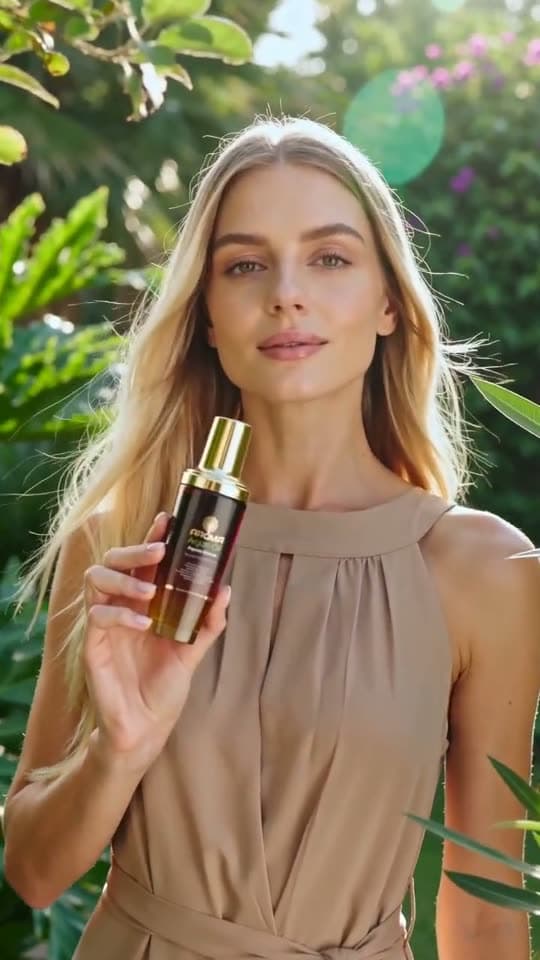
1. Skincare: The 14-Day Check-In
Suits: serums, moisturizers, sunscreen, anything with a visible result over time.
- 0-3s: Creator close to the camera, no makeup, natural window light. "Day one versus day fourteen of using one serum. Be honest with me."
- 3-10s: Day-one clip from their phone, slightly unflattering. "This is where I started. Dry patches here, and this redness never left."
- 10-25s: Quick cuts of the routine: one pump, texture on the back of the hand, patting it in. "Two drops at night, that is it. It sinks in fast, no sticky feel under makeup."
- 25-35s: Day-fourteen clip in the same light and angle. "Same light, same angle, no filter."
- 35-40s: "If your skin is like mine, this is the one I used. Link below."
Why it works: the same-light, same-angle comparison is proof the viewer can check for themselves. Steal this: film the "before" before you need it. Ship product to creators with instructions to record day one on arrival.
2. Supplements and Wellness: The Skeptic Converts
Suits: supplements, sleep aids, protein, wellness drinks.
- 0-3s: Creator holding the tub at arm's length, unimpressed. "I bought this to prove it does not work."
- 3-12s: "I have tried four sleep products. None of them did anything. So I gave this one three weeks."
- 12-25s: Phone screen of a sleep tracking app or a handwritten diary, then a shot of mixing the drink before bed. "Week one, nothing. Week two, I stopped waking up at 3 am. That never happens."
- 25-35s: "I am not saying it is magic. I am saying I reordered."
- 35-40s: Close-up of the reorder confirmation on their phone. "This is the flavor I get."
Why it works: starting skeptical disarms a skeptical viewer. The admission that week one did nothing makes week two believable. Steal this: let creators include a small negative. It raises trust more than another positive. Keep claims to what the creator experienced, and never imply medical outcomes.
3. Fashion and Modest Wear: The Try-On Haul
Suits: clothing, abayas, modest fashion, shoes, accessories.
- 0-3s: Creator holding three outfits on hangers. "Three looks from one order. Rating each one out of ten."
- 3-12s: Look one, a quick spin, mirror shot. "Seven. Love the fabric, but size up if you are between sizes."
- 12-22s: Look two, outdoors, walking. "Nine. This is breathable, which matters when it is 40 degrees outside."
- 22-32s: Look three, evening setting. "Ten. Wore this to a dinner and got asked where it is from twice."
- 32-38s: "Sizes I bought are in the caption. Link is below."
Why it works: the ratings format creates a reason to keep watching until the ten. The honest sizing note answers the biggest objection in online fashion. Steal this: a number or a countdown in the hook buys watch time. Put fit and size details in the caption to cut returns.
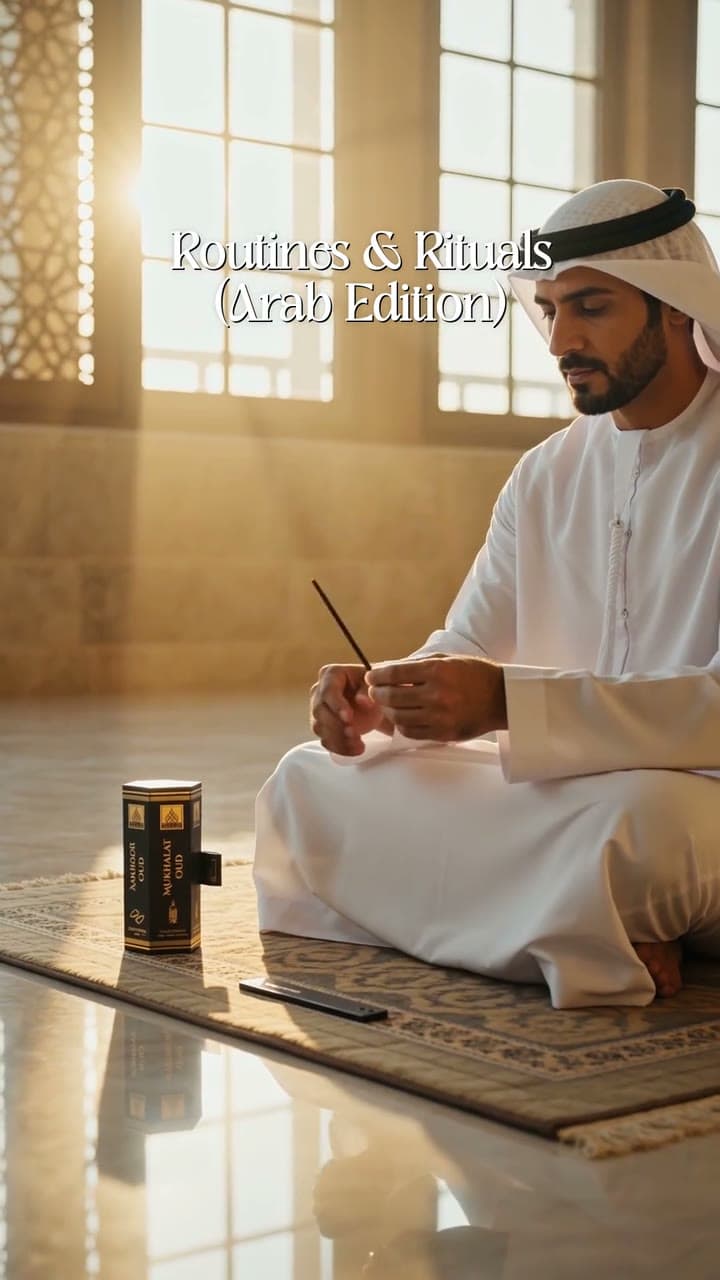
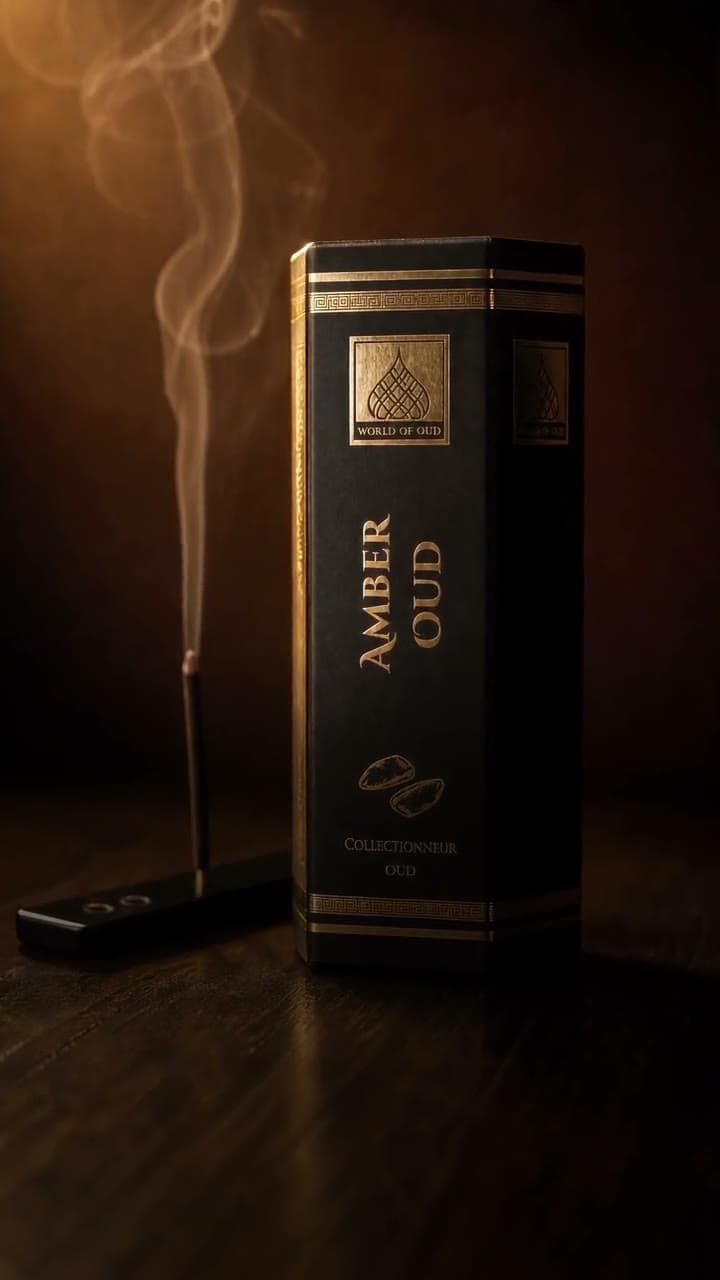
4. Fragrance and Oud: The Compliment Count
Suits: perfume, oud, body mists, home fragrance.
- 0-3s: Creator spraying wrists in the car. "I am counting how many people compliment this today."
- 3-15s: Quick clips through the day: coffee shop, office lift, mall. On-screen counter ticks up: 1, 2, 3.
- 15-25s: "It is a warm oud, but not heavy. It still smells like this at 9 pm." Smells the wrist at night.
- 25-35s: Bottle on the dashboard, natural light. "Final count: five. Five strangers."
- 35-40s: "This is the 50 ml one. Link below."
Why it works: you cannot smell a video, so the ad borrows proof from other people's reactions and from the time on the clock. Steal this: when the main benefit is invisible, make a counter, a timer or a reaction stand in for it.
5. Restaurants and Food Delivery: The First Bite Reaction
Suits: restaurants, cloud kitchens, cafes, meal plans, snacks.
- 0-2s: Close-up of a burger being pulled apart, cheese stretching. No talking yet.
- 2-8s: Creator taking the first bite, real reaction, a pause. "Okay. Okay, I get the hype now."
- 8-20s: Walk through the order: "Fries were still crispy after a 25-minute delivery, which never happens. This sauce, I want it in a bottle."
- 20-28s: "Ordered at 9:40, arrived at 10:05." Shows the delivery app timestamp.
- 28-32s: "Get the double, not the single. Trust me."
Why it works: food sells through the eyes and through a genuine reaction. The delivery timestamp answers "will it arrive cold?" Steal this: open on texture, not on a face. A two-second food close-up beats a "hi guys" intro every time.
6. Mobile Apps: The Screen-Record Walkthrough
Suits: consumer apps, budgeting apps, language learning, productivity tools.
- 0-3s: Creator in front of a green-screen of the app home screen. "This app saved me two hours this week. I timed it."
- 3-15s: Screen recording with the creator's face in the corner. "I used to do my grocery list, meal plan and budget in three places. Now I tap here, and it builds all three."
- 15-25s: Shows one feature end to end, no skipping. "Watch, I add chicken and it updates the budget."
- 25-32s: "The free version does all of this. I pay for the extra feature only because I am lazy."
- 32-36s: "Download link is below. It took me 30 seconds to set up."
Why it works: the viewer sees the product working, step by step, from a real user's phone. Steal this: show one feature completely instead of five features half-way. For app installs, the time-to-value line ("30 seconds to set up") is often the best closer.
7. Fintech and Banking: The "I Wish I Knew This Sooner"
Suits: banking apps, savings accounts, card products, remittance, investing education.
- 0-3s: Creator walking, talking to camera. "Things I wish I knew when I moved to Dubai. Number one is money."
- 3-15s: "I was sending money home every month and losing a chunk to fees and bad rates without noticing."
- 15-28s: Screen recording of the transfer screen, sensitive details blurred. "This shows the rate and the fee before I hit send. No surprises at the counter."
- 28-36s: "It took me ten minutes to open the account with my Emirates ID."
- 36-40s: "Not sponsored advice, just what I use. Details below."
Why it works: the "things I wish I knew" format feels like help, not a pitch, and it targets a specific life moment. Steal this: anchor to a life event your buyer recognizes (moving country, first salary, a new baby). Financial ads face strict rules, so keep claims factual, add the required disclosures, and have compliance approve the script before filming.
8. Real Estate: The Viewing Vlog
Suits: developers, brokers, short-term rentals, property management.
- 0-3s: Creator opening a front door, keys in hand. "Come with me to see a one-bed I did not expect to like."
- 3-15s: Walking tour, handheld: "Kitchen is small but the storage is clever. This window, though." Pans to the view.
- 15-25s: "Ten minutes to the metro, and the gym is downstairs. I checked at rush hour."
- 25-35s: Balcony at sunset. "Okay, this is the part that would sell me."
- 35-40s: "Viewings are open this week. Message them, details below."
Why it works: it gives the viewer a realistic walkthrough with honest small negatives, which makes the positives believable. Steal this: shoot at the hour that flatters the property and say so. For lead ads, a direct "message them" CTA into WhatsApp often beats a website click in the Gulf.
9. Gyms and Fitness: The Week-One Diary
Suits: gyms, studios, fitness apps, home equipment.
- 0-3s: Creator in the car outside the gym, nervous. "First week at a new gym. I am documenting everything."
- 3-15s: Day one, induction with a coach, honest voice-over. "I had not trained in a year. They did not make me feel stupid, which was my biggest fear."
- 15-25s: Day three, class clip, sweating. "This class destroyed me in the best way."
- 25-35s: Day seven, calmer. "What surprised me: the 6 am class was not empty, and nobody was posing."
- 35-40s: "They have a free first class. That is how I started."
Why it works: it names the real fear (being judged) and resolves it. Diaries also create a mini-series you can run as three separate ads. Steal this: ask creators what they were worried about before buying, then build the hook around that worry.
10. Education and Courses: The Student Story
Suits: universities, training institutes, online courses, language schools.
- 0-3s: Creator at a desk with a laptop. "Six months ago I could not read a balance sheet."
- 3-15s: "I work full time, so I needed something I could do at night. Two evenings a week, online."
- 15-28s: Screen of a course module, then a photo of a certificate or a new job post on their phone. "Module four is where it clicked."
- 28-36s: "It was not easy. I nearly quit in week three. Glad I did not."
- 36-42s: "Next intake starts soon. Link below."
Why it works: education is a big decision, and a peer who looks like the viewer lowers the risk. The "nearly quit" moment is honest and relatable. Steal this: state the time commitment early. It is the first question every adult learner has.
11. Clinics and Aesthetics: The Consultation Walkthrough
Suits: dental clinics, dermatology, aesthetics, physiotherapy, wellness centers.
- 0-3s: Creator in the clinic reception. "I was scared of this appointment, so I am filming it."
- 3-15s: "First, they did a consultation. No pressure to book anything that day."
- 15-28s: Clips of the clean room, the doctor explaining a treatment plan on a screen (faces and records only with consent). "They explained what would happen and what would not."
- 28-36s: "How I feel walking out: relieved. That is it."
- 36-40s: "You can book a consultation first, like I did."
Why it works: it sells the experience and the reassurance, not a medical result. Steal this: in health categories, show process and care, not outcomes. Before-and-after images and outcome claims are heavily restricted on most platforms and by health regulators, so get approvals before you shoot.
12. Home and Cleaning: The Satisfying Fix
Suits: cleaning products, home gadgets, storage, appliances.
- 0-2s: Close-up of a stained grout line, then the first wipe revealing white tile. No voice.
- 2-10s: Creator voice-over: "Two years of grout in my rented flat. One product, five minutes."
- 10-20s: Real-time wipe, no speed-up, then a split screen of cleaned vs not cleaned.
- 20-28s: "No scrubbing with a toothbrush. My landlord will think I am a different person."
- 28-32s: "This is the spray. Link below before I get my deposit back."
Why it works: satisfying transformations are watched to the end, and real-time footage proves no editing trick. Steal this: say "no speed-up" when you mean it. Viewers look for the cut.
13. Automotive: The Test Drive POV
Suits: car dealers, rentals, subscriptions, car care, accessories.
- 0-3s: Phone mounted on the dashboard, creator getting in. "I booked a test drive I had no intention of buying from."
- 3-15s: Driving footage, creator talking. "Okay, the seats are cooling, which in July is not a luxury, it is survival."
- 15-25s: Parking with the camera view on screen. "I am terrible at parallel parking. Watch this."
- 25-35s: "The monthly option surprised me. Ask them, it is not what I thought."
- 35-40s: "Book a test drive, it is free. Link below."
Why it works: the reluctant buyer framing matches how most people feel about dealerships. Showing one feature solving a real problem (heat, parking) beats a spec list. Steal this: pick one local pain point and prove the product fixes it on camera.
14. Hotels and Staycations: The 24-Hour Diary
Suits: hotels, resorts, beach clubs, attractions, tour operators.
- 0-3s: Creator dropping a bag on a hotel bed. "Twenty-four hours at a staycation to see if it is worth it."
- 3-12s: Check-in, room tour, the view. "Upgrade was not promised, so this is the standard room."
- 12-25s: Pool at 4 pm, dinner, breakfast spread. "Breakfast is the reason I would come back."
- 25-35s: "Downside: the pool gets busy at the weekend. Go on a weekday if you can."
- 35-40s: "Rates for weekdays are cheaper. Link below."
Why it works: the 24-hour format gives a story arc in under a minute, and the honest downside builds trust. Steal this: tell creators to film the standard room, not an upgrade. Viewers who book and get something worse leave bad reviews.
15. B2B Software: The Workflow Confession
Suits: SaaS, CRM, accounting software, HR tools, agencies selling to businesses.
- 0-3s: Founder or employee at their desk, deadpan. "Confession: our sales team was running on a spreadsheet until last month."
- 3-15s: "Every Monday we spent an hour asking who called which lead. Nobody knew."
- 15-28s: Screen recording of the dashboard, one lead moving through stages. "Now every call and WhatsApp message lands here automatically."
- 28-38s: "It took us a week to set up, mostly because we were slow."
- 38-45s: "If your team still has a 'leads final v3' file, see the demo below."
Why it works: B2B buyers are people scrolling the same feeds. A peer confession is more relatable than a feature video. Steal this: use the real job title of your buyer in the hook. "Sales managers" or "clinic owners" filters the audience for you on LinkedIn and Meta.
How These UGC Ads Run on Each Platform
A UGC video becomes a UGC ad through the platform's ad tools. The format you choose changes who the ad appears to come from, which matters as much as the script.
- TikTok: Main UGC ad format: Spark Ads using a creator's or brand's organic post; Ad appears to come from: The creator's or brand's account; Best use: Cold prospecting, social proof from likes and comments
- Instagram and Facebook: Main UGC ad format: Partnership ads (creator plus brand handle); Ad appears to come from: The creator and the brand together; Best use: Prospecting and retargeting with creator trust
- Instagram and Facebook: Main UGC ad format: Standard ads with UGC files uploaded; Ad appears to come from: The brand page; Best use: Fast testing of many edits and hooks
- YouTube Shorts: Main UGC ad format: In-feed video ads in Shorts; Ad appears to come from: The brand channel; Best use: Reach and search-adjacent demand
- Snapchat: Main UGC ad format: Single image or video ads in Stories and Spotlight; Ad appears to come from: The brand profile; Best use: Younger audiences, strong reach in the Gulf
On TikTok, Spark Ads let you boost an existing post from your account or a creator's account with their authorization, so likes, comments and follows stay on the original post. On Meta, partnership ad permissions (set up in Meta Business Suite) let a brand run ads from a creator's handle once the creator approves. Both formats keep the creator's name on the ad, which is a big part of why UGC works.
Our working default: test hooks quickly as standard uploads from the brand account, then move the winners into Spark Ads and partnership ads for scale. For a deeper look at hooks, structure and refresh rates on these platforms, read our guide to AI video ads for Meta and TikTok.
Technical basics apply to every platform. Shoot 9:16 vertical at 1080 x 1920, keep captions and faces inside the center safe zone, and burn in subtitles because many people watch on mute. Always check the current specs in each platform's help center before export, because they change.
UGC Ads in Dubai and the GCC: What Changes
Most of the UGC ad examples you find online were made for the US or UK. The structure transfers well to the Gulf, but several details change. Getting them right is often the difference between an ad that feels local and one that feels imported.
Language and dialect. Run Arabic and English versions, not one or the other. For Gulf audiences, a creator speaking Khaleeji dialect usually feels more native than Modern Standard Arabic, which can sound like a news broadcast. Bilingual captions (Arabic speech with English subtitles, or the reverse) work well in mixed markets like Dubai.
Creators who match the buyer. The UAE is one of the most diverse markets in the world. A skincare ad aimed at Emirati women, one aimed at South Asian professionals and one aimed at European expats may need three different creators, not three different captions.
Cultural fit. Styling, settings and gestures matter. Modest clothing, respectful framing and avoiding scenes that clash with local norms are basic requirements, not creative choices. When in doubt, have a local reviewer watch the cut before it runs.
Calendar moments. Ramadan changes when and how people scroll, with heavier late-night viewing, and content tone shifts toward family, generosity and gifting. Eid, back-to-school, summer travel, the Dubai Shopping Festival and White Friday are all strong moments for UGC hooks built around the occasion.
Permits and disclosure. In the UAE, people publishing advertising content on social media need an advertiser permit from the UAE Media Council, including visitors in some cases. The UAE Government portal's overview of media regulation in the UAE is a good starting point; check the Media Council's current permit rules before you brief creators, and make sure paid content is clearly disclosed.
WhatsApp as the CTA. In the Gulf, many buyers prefer to message a business rather than fill in a form. For services, real estate, clinics and high-value products, a "message us on WhatsApp" CTA often converts better than a landing page.
We cover more of the local production side in our guide to AI video production in Dubai.
Real Creators vs AI UGC: Which Examples Suit Each
AI UGC uses AI avatars or AI-generated people to deliver UGC-style scripts. Tools like HeyGen, Arcads and Creatify can produce a talking-head video from a script in minutes, and video models such as Veo, Sora, Kling and Runway can generate scenes and b-roll. It is fast and cheap per variant. It is also easy to get wrong.
Here is how we decide, based on the examples above.
- Skincare 14-day check-in: Real creator: Yes; AI UGC: No; Why: The proof is a real face over time. Faking it is misleading.
- Supplement skeptic: Real creator: Yes; AI UGC: No; Why: Personal experience claims must be genuine.
- Fashion try-on: Real creator: Yes; AI UGC: Partly; Why: Fit and fabric need real bodies. AI can help with backgrounds.
- Fragrance compliment count: Real creator: Yes; AI UGC: Partly; Why: Reactions must be real. AI can make CGI bottle shots.
- App walkthrough: Real creator: Either; AI UGC: Yes; Why: Screen recordings carry the proof; the presenter can be AI.
- Fintech tips: Real creator: Either; AI UGC: Yes, with care; Why: Explainer style works with AI, but compliance review is a must.
- B2B confession: Real creator: Yes; AI UGC: Partly; Why: Founders and real employees are more credible.
- Hook testing across all types: Real creator: Partly; AI UGC: Yes; Why: AI is ideal for testing 10 to 20 opening lines cheaply.
Our rule is simple. If the ad claims a personal experience, use a real person who had that experience. If the ad explains how something works, AI UGC can carry it, especially for Arabic, Hindi or other language versions of an English winner.
Be honest with the audience as well. Platforms are adding AI-content labels, and viewers increasingly spot avatars. AI UGC that pretends to be a real customer review is risky for trust and may break platform rules. AI UGC that is clearly a presenter explaining a product is fine.
We tested the main tools on real campaigns in our roundup of the best AI video generators for ads. In practice, our strongest results come from a hybrid: real creators for proof, AI for hook variants, languages and visuals, and a human creative team deciding what ships.
How to Brief and Test Your Own UGC Ads
The examples above are only useful if you can turn them into ads that make money. This is the process we use, condensed.
- Pick one buyer and one objection. "Busy mums in Dubai who think skincare routines take too long" is a brief. "Women 25 to 45" is not.
- Choose two or three example structures from this guide. Match them to your product: a visible result suits the check-in, an invisible benefit suits the counter, software suits the walkthrough.
- Write a one-page brief, not a script. Include the hook options, the one claim to prove, what to show on camera, what not to say, the CTA and the deadline. Give creators the beats and let them use their own words.
- Ask for raw footage and extra hooks. Request three to five different opening lines per creator, plus unedited b-roll. Hooks are the cheapest thing to test and the biggest lever on performance.
- Edit multiple versions. From one creator shoot, cut several ads: different hooks, a short 15-second edit and a longer 30 to 45-second edit, and one version with a different CTA.
- Launch in a clean test. Put the variants in one ad set or campaign with a budget big enough to give each ad a fair number of impressions before you judge it.
- Judge by creative metrics first, then cost. Look at hook rate (the share of impressions that watch the first three seconds), hold rate (the share that watch to the midpoint or a set time), click-through rate and cost per result.
- Scale the winners and iterate on them. Move the best ads into Spark Ads or partnership ads, then brief new hooks on the winning structure. Keep the body, change the first three seconds.
- Refresh before fatigue hits. When frequency rises and cost per result climbs on a winner, introduce a new creator or a new angle before performance drops.
A simple way to read the numbers: a low hook rate means the opening is wrong. A good hook rate with a low hold rate means the middle is boring or the promise in the hook was not paid off. Good watch time with a low click-through rate means the CTA or the offer is weak.
On cost, there is no single honest number. What you pay depends on the number of creators, usage rights, language versions, edits and whether AI is part of the workflow. The more useful number to watch is cost per tested variant, because UGC programs win through volume and iteration, not one hero video. For a figure on your own brief, get a quote from our team.
Usage Rights, Disclosure and Mistakes to Avoid
Most UGC ad problems we fix are not creative problems. They are paperwork and process problems that surface after the ad is already running.
Not securing paid usage rights. Permission to repost on your organic feed is not permission to run the content as a paid ad. Agree in writing how long you can use the video in ads, on which platforms, in which countries, and whether you can edit it. Do the same for whitelisting, where ads run from the creator's handle.
Using customer content without consent. A customer tagging you in a video does not give you ad rights. Ask, get written approval, and keep a record of it.
Skipping disclosure. Paid creator content must be clearly labeled as an ad or partnership. Platforms provide paid-partnership labels for this. Hiding the relationship damages trust and can break platform rules and local regulations.
Over-scripting. If a creator reads a brand paragraph word for word, the video loses the thing you paid for. Brief the beats, approve the claims, and let them talk.
Making claims you cannot support. Health, finance and results claims need to be accurate and approved. "This changed my skin" from a real user is a personal experience. "This cures acne" is a claim you are making, and you need proof.
Running one video for months. Even a great UGC ad wears out. Plan a regular flow of new hooks and new creators rather than relying on a single winner.
Ignoring the edit. Raw creator footage is rarely ready to run. Captions, pacing, a stronger first frame and clear product shots often turn an average video into a strong ad. You can see our AI video portfolio for examples of how we cut UGC-style and AI-assisted ads for brands.
Frequently Asked Questions
What are UGC ads?
UGC ads are paid ads built from user-generated content: videos or photos that look like they were made by a real customer or creator rather than a brand studio. They are usually vertical, filmed on a phone and spoken to camera. Brands run them on TikTok, Instagram, Facebook, YouTube Shorts and Snapchat because they feel native to the feed and build trust faster than polished brand ads.
What is a good example of a UGC ad?
A strong example is the skincare 14-day check-in: a creator shows their skin on day one, walks through a simple routine, then shows day fourteen in the same light and angle and points to the product link. It works because the viewer sees proof instead of being told about it. The same structure adapts to fitness, haircare, cleaning and any product with a visible result.
How long should a UGC ad be?
Most UGC ads perform best between 15 and 45 seconds, with the hook in the first one to three seconds. Short 15-second edits work well for retargeting and simple products. Longer 30 to 45-second versions suit stories, app walkthroughs and higher-consideration purchases. Cut both lengths from the same footage and let the test results decide which one gets more budget.
Can I make UGC ads with AI?
Yes. AI avatar tools can deliver UGC-style scripts in many languages, and AI video models can create scenes and b-roll. AI UGC works best for explainers, app walkthroughs and testing many hooks quickly. Use real creators whenever the ad describes a personal experience or result, because faking that is misleading. A hybrid of real creators for proof and AI for variants usually performs best.
Do I need permission to use customer videos in ads?
Yes. A customer tagging your brand does not give you the right to use their content in paid ads. Get written permission that covers paid usage, the platforms, the countries, the duration and whether you can edit the video. In the UAE, people publishing advertising content on social media also need an advertiser permit from the UAE Media Council, so check the current rules before you brief creators.
How do UGC ads work in Dubai and the GCC?
The structure is the same, but the details change. Run Arabic and English versions, use creators who match each audience, respect local cultural norms in styling and settings, and plan around Ramadan, Eid and major shopping events. Many Gulf buyers prefer to message businesses directly, so a WhatsApp call to action often converts better than a website form for services and high-value products.
Ready to Turn These UGC Ads Examples Into Your Own?
Good UGC ads are not luck. They come from a clear buyer, a proven structure, honest proof on camera and a steady flow of new hooks. The 15 UGC ads examples above give you the structures. The work is matching them to your product, your market and your platforms, then testing fast.
That is what we do at XMA. Our AI video production team in Dubai combines real creators, AI production and human creative direction to deliver UGC-style ads for Meta, TikTok and YouTube Shorts, from brief to launch in 7 days, in Arabic and English. Book a strategy call and we will suggest the UGC formats most likely to work for your brand.